
People tend to discuss robotics using the same old names.
- Tesla.
- Boston Dynamics.
- Amazon Robotics.
The focus on robotics tends to be on humanoid robots and their viral demo videos.
However, when looking at how robotics is currently used throughout the global supply chain, the main players are less obvious and far from the spotlight.
Who Are The Companies Driving Industrial Automation?
When you enter a high volume automobile manufacturing plant, a semiconductor manufacturing facility, or a major manufacturing operation, you are unlikely to see humanoid robots working in these environments.
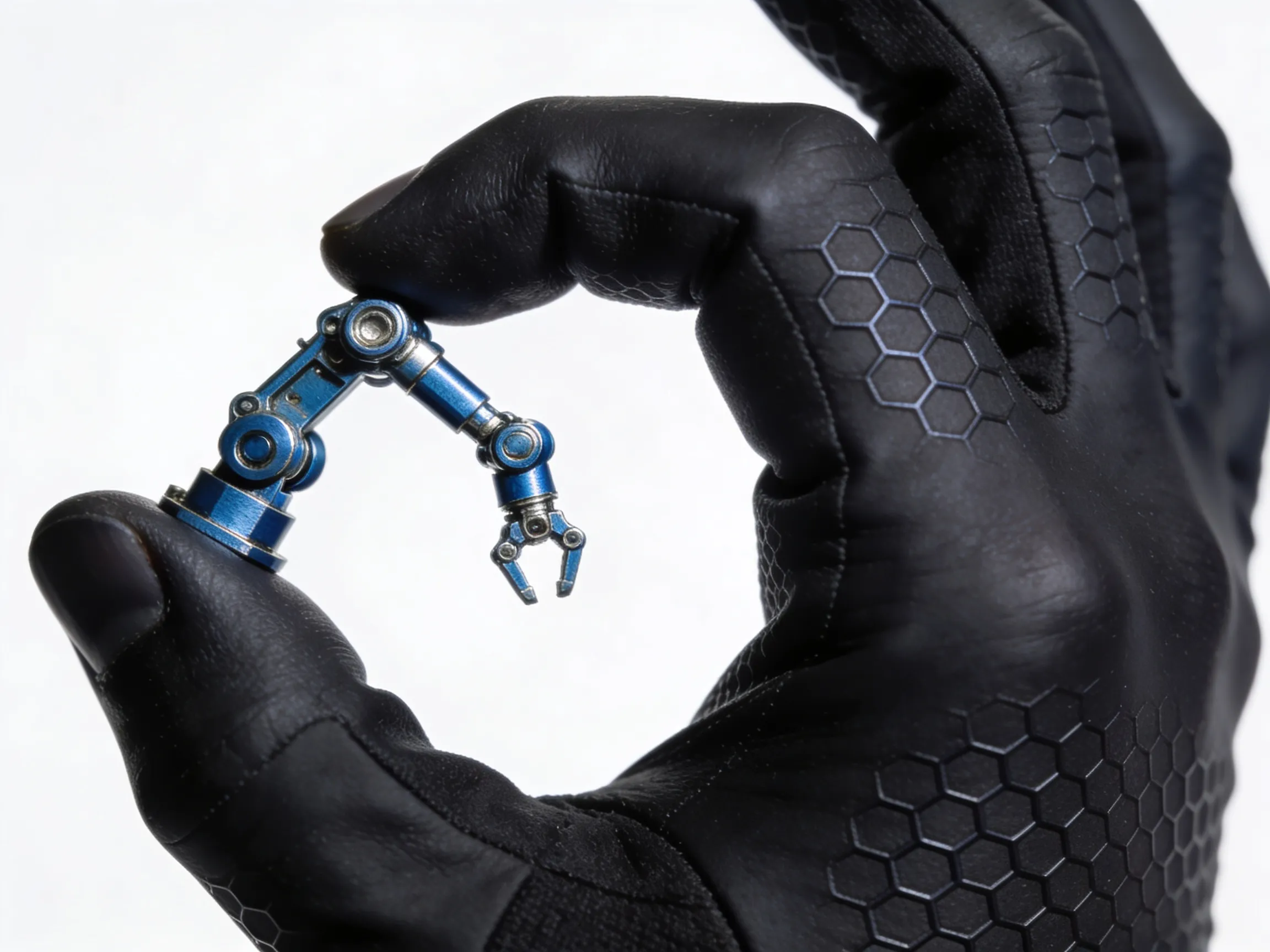
However, you are likely to see robotic arms (yellow, orange, white and blue) built for high repeat cycle times, precision, and maximum uptime.
Firms such as FANUC, ABB, KUKA, Yaskawa, and Kawasaki Robotics have been developing and implementing industrial automation solutions for decades.
They are not marketing futuristic concepts. They are selling reliability.
Why Do These Companies Matter More Than Viral Robots?
Industrial robotics is not a show business.
It is a profit driven business.
Manufacturers need:
- High cycle times.
- Low failure rates.
- Long maintenance intervals.
- Low integration costs.
- Consistent production output.
These companies are optimizing for maximum uptime.
Maximum uptime can compound.
Once a manufacturing plant develops a standardized robotic system for its operations, the cost of changing the system increases exponentially.
All of the associated software, tools, equipment and maintenance contracts are aligned to the existing system.
Therefore, this results in long term durability.
Scale vs. Novelty
Humanoid robots are compelling because they mirror humans.
Industrial robots are compelling because they can perform better than humans in very specific areas.
One humanoid robot may generate publicity.
An industrial robot welding arm that runs 24/7 for 15 years generating consistent production output generates economic benefits.
There are now millions of industrial robots installed globally, with the highest concentrations found in countries including South Korea, Singapore, Japan, and Germany.
This is not a new trend. This is an established infrastructure.
Why Is There An Attention Gap?
There is a reason why humanoid robots receive so much media coverage.
They represent what we think the future will look like.
Industrial automation represents machines.
However, the economic change that is taking place is happening in the background for decades.
Automotive plants use robots.
Electronics manufacturers use robots.
Logistics use robots.
Semiconductor manufacturers use robots.
This transition is not speculative.It is incremental and cumulative.
Incremental automation is also significantly more difficult to remove than experimental automation.
What's The Important Strategic Insight?
The important strategic insight is not that robots exist.
It is that industrial automation has become mature enough that the cost curve has stabilized and there are accepted integration standards for robots.
Over time, the price of robots has decreased.
Their capabilities have increased.
Their software has integrated with other systems.
In many manufacturing environments, automation is no longer an investment decision.
Automation is assumed.
That is a different stage of technology adoption.
What Does This Mean For The Broader Economy?
Automation does not immediately kill off industries.
It gradually alters the cost structure.
As time goes on, labor expectations change.
Production capacity expectations change.
Decisions regarding where to produce geographically change.
And companies that choose not to automate compete with companies that have structurally lower operating costs.
This is not about creating hype.
It is about creating compounding efficiencies.
The Lesson For AI And Automation In General
There is another lesson to be learned.
The loudest innovation is not always the one that has the greatest economic impact.
- Humanoid robots are exciting.
- AI demos are amazing.
- Marketing narratives create excitement.
However, the companies that develop the most durable leverage were able to build ecosystems upon which manufacturing plants rely.
That is a different type of power.
It is less visible. It is more structural.
—
#skillsonic #aiarchitecture #futureofcompanies #aitransition #futureofwork
by Eugene Baiste, AI Capability Architect at Skill Sonic
.avif)
.avif)
.avif)
.avif)
.avif)